

In the field of glass deep processing, cutting is the first key step to shape the glass and realize the design concept. The choice of cutting process directly affects the accuracy and efficiency of the product and whether complex designs can be realized. As a professional glass product manufacturer, BO-GLASS is well versed in the characteristics of various cutting technologies and focuses on two cutting-edge technologies: high-pressure water jet cutting (water jet) and laser cutting, to meet the market’s growing demand for high-precision, high-efficiency and complex shaped glass.
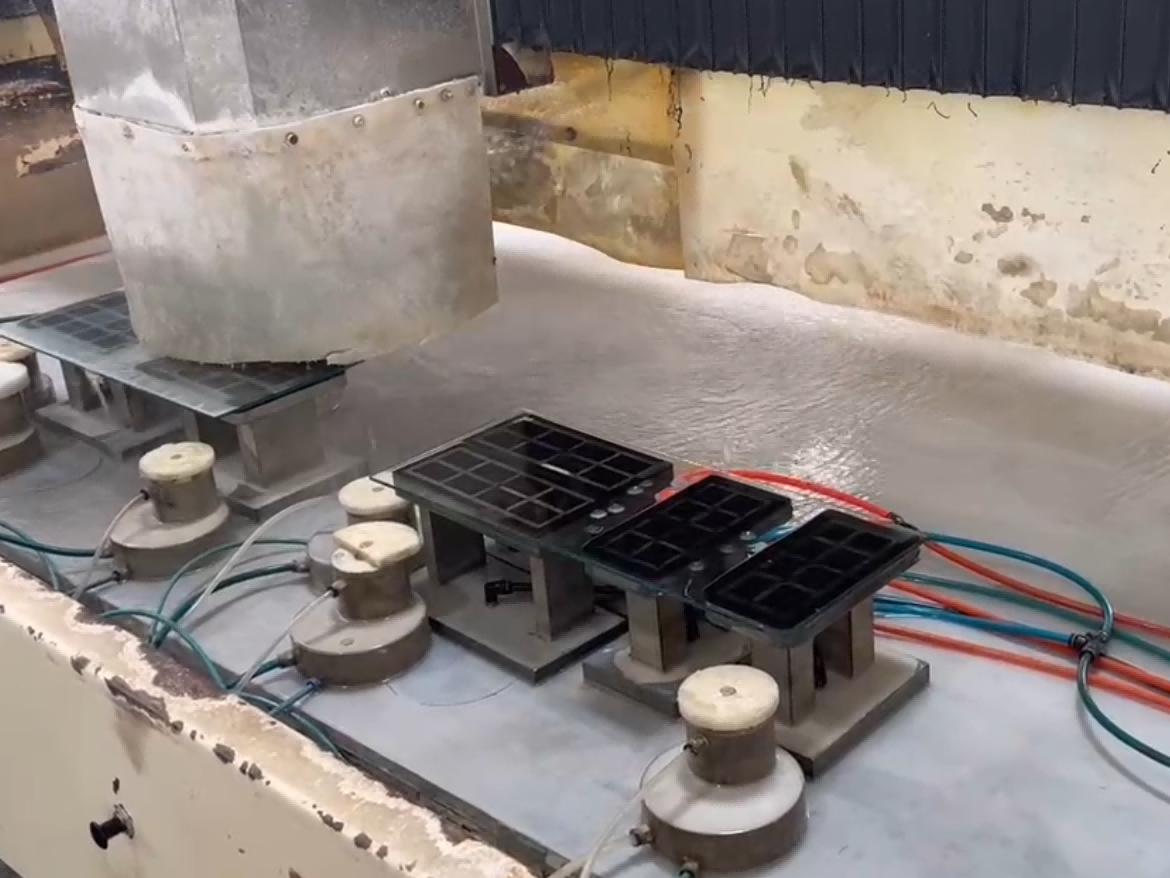
1.High-pressure water jet cutting (water jet cutting)
Technical principle:
Using ultra-high pressure (200-400 MPa) water flow mixed with hard abrasive (such as pomegranate sand), a high-speed jet is formed through a tiny nozzle (about 0.8-1mm in diameter), which impacts the glass surface to produce tiny brittle damage, and continuously penetrates the glass to form a cutting line. The computer numerical control (CNC) system realizes precise path control.Core features and value:
Cold processing: No heat affected zone (HAZ), eliminating the risk of thermal deformation or micro crack expansion of glass. Especially suitable for fine secondary processing of tempered glass, special glass that is heat sensitive or requires absolute structural integrity.
Excellent complex processing capabilities: Can cut any thickness (limited by equipment capabilities), perfectly realizing the moldless cutting of complex contours, sharp corners, inner holes and oversized glass.
Wide material applicability: In addition to various types of flat glass (float, ultra-clear, Low-E, colored glaze, etc.), the cutting advantage of composite laminated glass (PVB/SGP/EVA) is significant, which can effectively avoid delamination and ensure the integrity of the sandwich structure.
Typical applications:
Architectural art glass curtain walls, special-shaped skylights, car sunroofs and side windows, electronic display glass substrates, safety bulletproof glass components, precision instrument windows, etc.
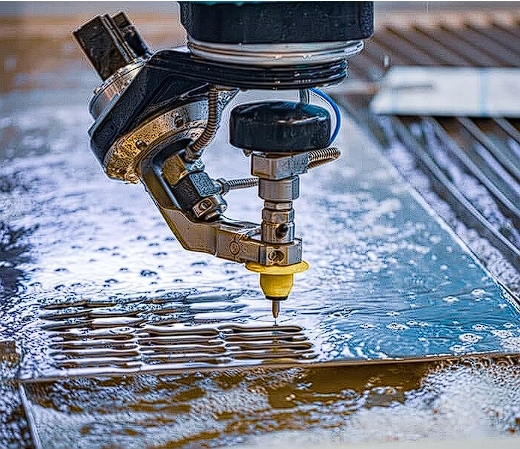
Waterjet cutting
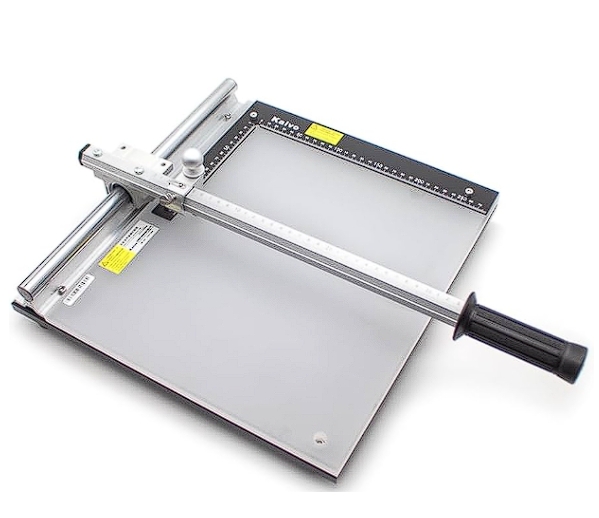
Manual glass cutting knife
2.Mechanical cutting
Manual cutting:
Relying on the operator’s experience, using a high-hardness alloy wheel cutter to separate stress after scratching. Suitable for small batches, simple shapes or on-site repairs, with limited efficiency and accuracy.
Automatic cutting machine:
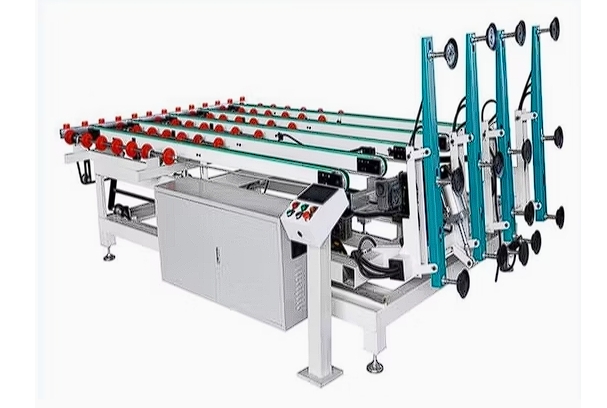
Technical core: Integrated unloading table (vacuum suction cup automatic loading), CNC cutting table (high-hardness alloy wheel precise scratching), and breaking table (stress separation).
Core features and value: Extremely fast cutting speed (up to 200 meters/minute or more), precise positioning (error <0.5mm), and extremely high efficiency. It is an economical and efficient choice for cutting large quantities of regular-shaped (straight lines, rectangles, simple arcs) flat glass. Derivative equipment such as automatic laminated glass cutting machines (upper and lower synchronous cutting + special breaking) meet specific needs.
Typical applications: Standard panels for building doors, windows, curtain walls, furniture glass, large quantities of home appliance panels, etc.
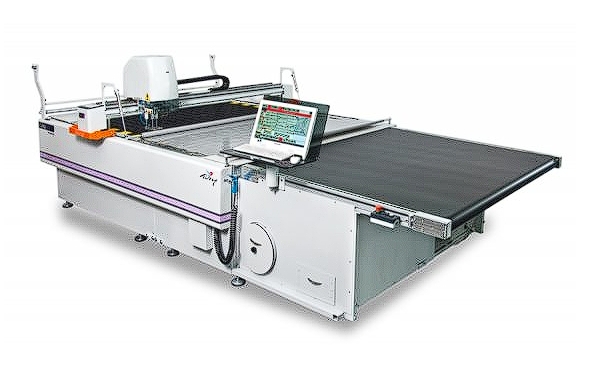
Automatic cutting machine
Unloading table
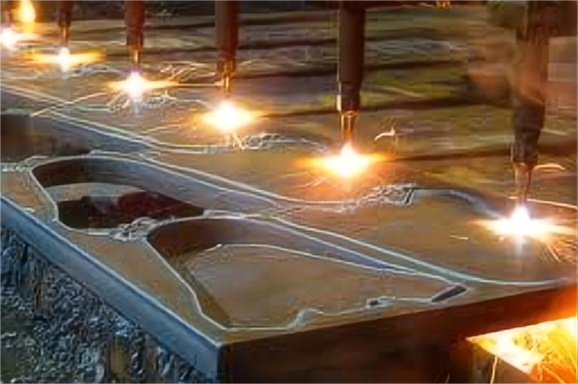
3.Flame cutting
Technical principle:
Use high temperature flame (such as gas + oxygen) to locally heat the glass, combined with rapid cooling (thermal stress) or pre-scratching (crack extension) to achieve cutting. Methods include melting, rapid cooling, and cracking.Core features and value:
It has unique advantages in cutting thick-walled glass products (such as utensils, bottles and cans), and can obtain a smooth “mirror” cutting effect. However, it requires high control accuracy and has a relatively specific application range.Typical applications:
Glassware manufacturing, ampoule production, etc.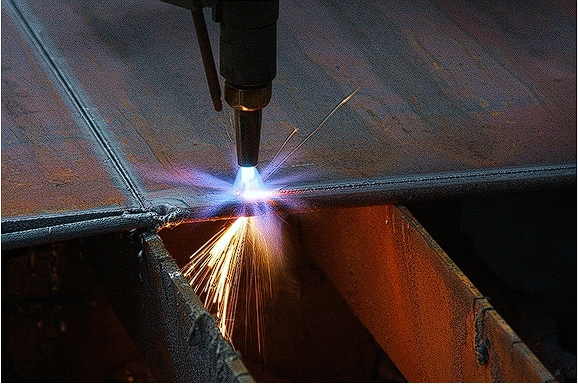
Laser cutting
Technical principle:
Focusing a high-energy-density laser beam on the glass surface instantly vaporizes or melts local materials, and non-contact cutting is achieved with precise CNC control.Core features and value:
Micron-level precision: The cutting tolerance can reach ±0.1mm, the edge is smooth and has no chipping (Ra<0.5μm), and no secondary polishing is required.Non-contact processing: Avoid mechanical stress and is suitable for brittle materials such as ultra-thin glass (0.1-12mm) and chemically strengthened glass.Complex microstructure realization: Can process micropores with a diameter of <0.2mm, fine curves and functional chamfers.Typical applications:
Electronic display cover, optical instrument windows, medical devices, microfluidic chips, etc.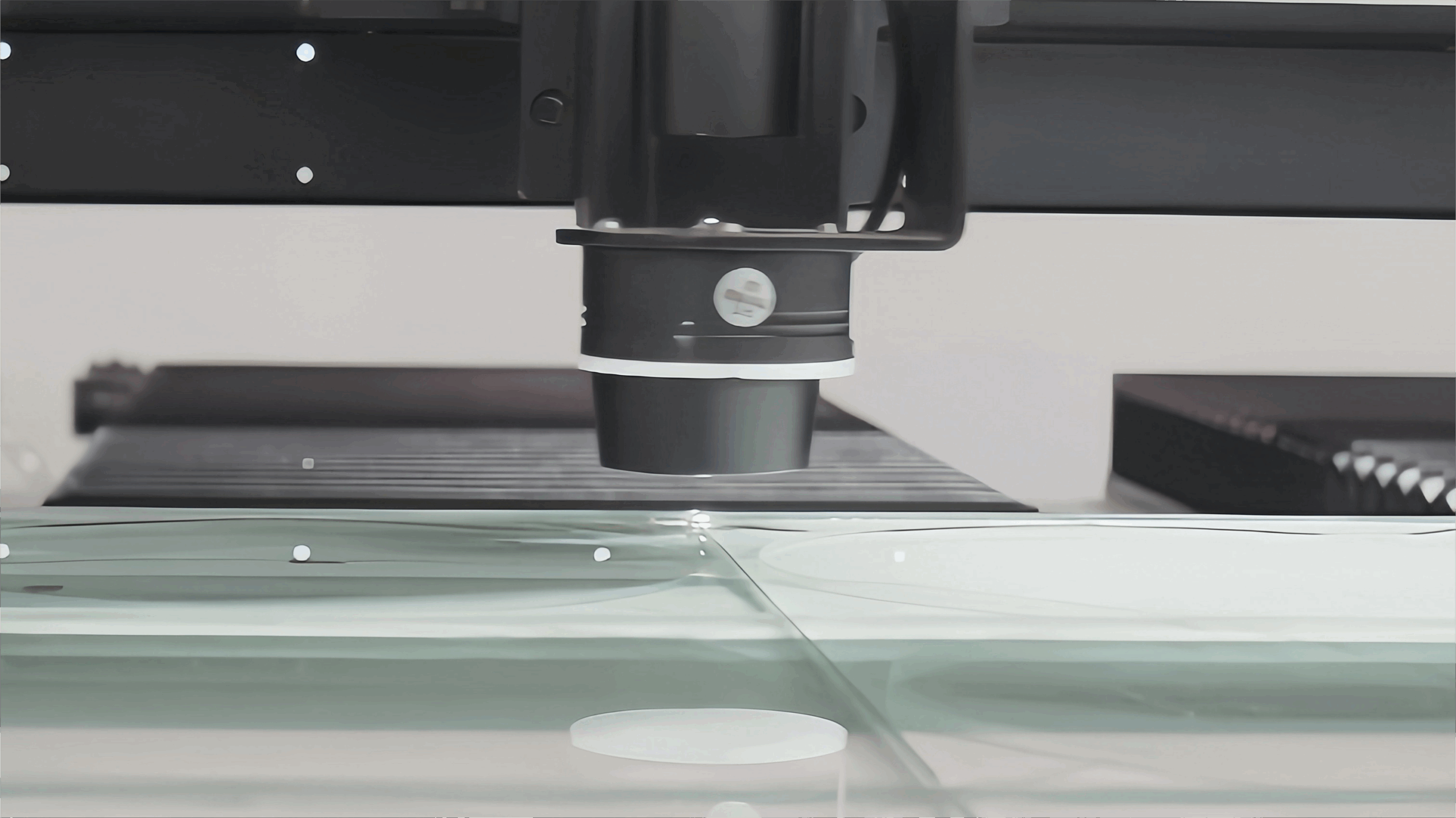
BO-GLASS Core Technology: Water Jet Cutting And Laser Cutting
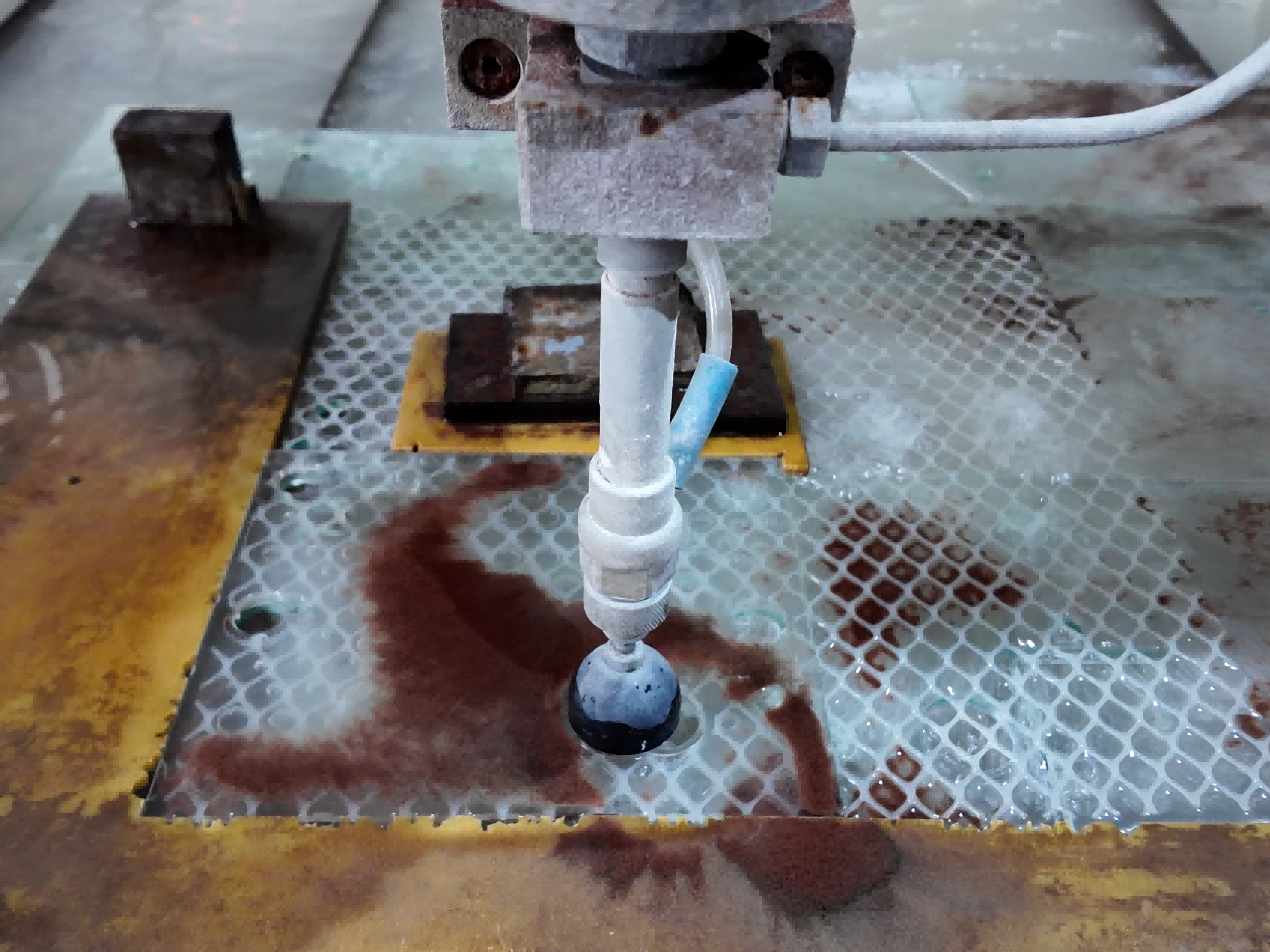
(1)High-pressure water jet cutting (water jet) at BO-GLASS:
Experts in complex and thick plate cutting: BO-GLASS uses advanced large-scale CNC water jet cutting centers, focusing on solving complex and special-shaped cutting, ultra-large and ultra-thick glass cutting, and laminated glass precision processing that are difficult to achieve with other processes. Our water jet technology can complete various cutting tasks with demanding designs without stress and high precision, ensuring the cutting edge quality and product structural strength.
Process guarantee: Through precise control of water pressure, abrasive flow, cutting speed and path optimization, BO-GLASS ensures that even complex artistic patterns or precise functional openings can meet strict dimensional tolerances and edge requirements. For the cutting of laminated glass, we have mature processes to prevent damage to the middle layer or poor separation.
(2)Laser cutting at BO-GLASS:
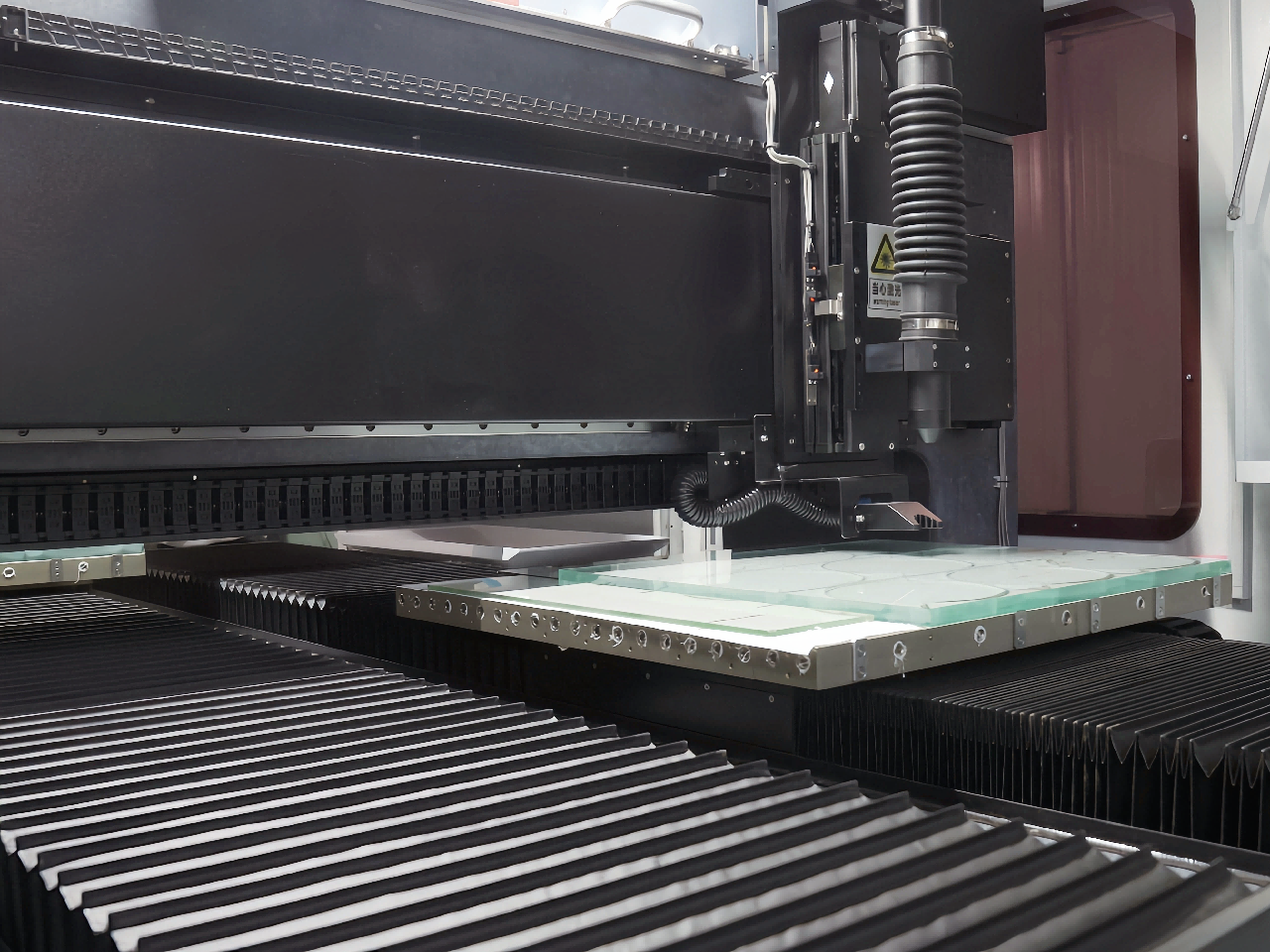
Ultra-high precision and efficient processing: BO-GLASS is equipped with a high-power laser cutting system, specializing in the cutting of thin plate glass, display cover glass and microstructures with extremely high requirements for precision and edge quality. The non-contact processing characteristics of lasers avoid mechanical stress, can achieve micron-level precision cutting, and the cutting edge is smooth and flat (low Ra value), which significantly reduces or even eliminates the subsequent edge grinding process.
Efficiency and intelligence: The laser cutting speed is much faster than the traditional mechanical scratching method, which is particularly suitable for the rapid production of large quantities of fine patterns. BO-GLASS’s laser system is combined with intelligent software to support efficient nesting and automated operation, improving overall production efficiency and consistency.
Frontier applications: BO-GLASS continues to explore the application of laser technology in frontier fields such as ultra-thin glass, curved glass and stealth dicing, expanding the technological boundaries of glass processing.
Glass cutting is not only about separating materials, but also the basis for realizing product functions and aesthetic values. With its in-depth understanding and mature application of core technologies of waterjet and laser cutting, combined with professional process knowledge and strict quality control, BO-GLASS is committed to providing customers with:
High-precision cutting: meeting strict dimensional tolerances and shape and position requirements.
Complex design realization: breaking through traditional cutting limitations and empowering designers’ creativity.
Optimal edge quality: reducing secondary processing, improving product yield and aesthetics.
Efficient and stable production: providing the most suitable cutting solutions for different needs and ensuring delivery.
BO-GLASS — shaping glass with infinite possibilities with exquisite cutting technology. We look forward to becoming your trusted glass manufacturing partner with professional technical capabilities.


