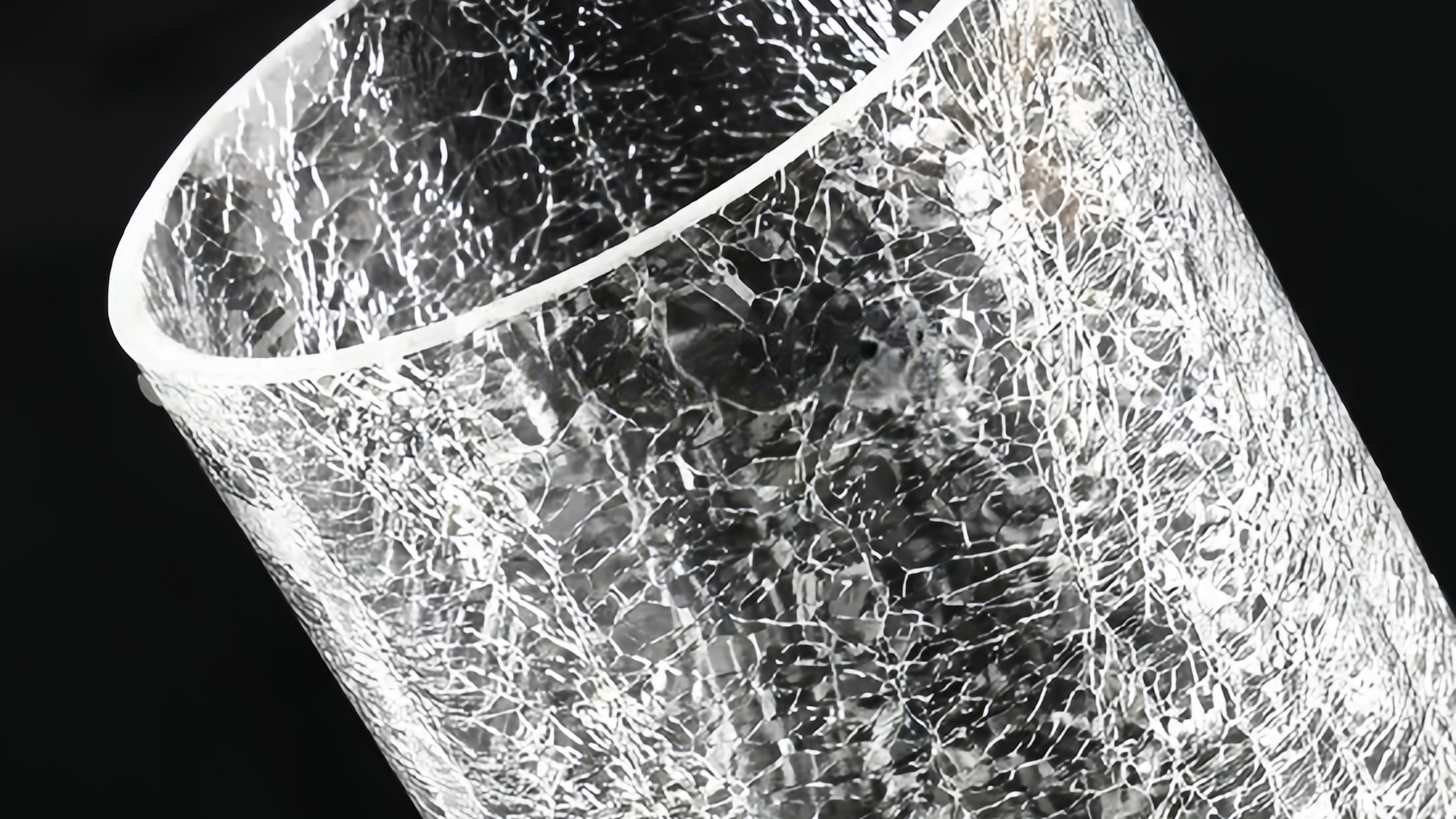
(1) Ice-patterned glass is named for the many cracks on the surface of the glass product that resemble ice patterns. It is also called water-stimulated, frosted, or imitation cracked glaze glass. When making it, the hot bubble is first placed in cold water for rapid cooling to produce cracks, then put in an oven for heating, and then blown into shape using ordinary methods. The size of the cracks is directly related to the temperature of the bubble, the temperature of the cold water, the time of entering the water, and the oven baking time. If it is not heated in an oven, the glass may crack. When the cracked bubble is in the mold, it will scrape off the local “ash” in the mold. The direct contact between the bubble and the mold is prone to “explosive pattern” product defects. In addition, the surface cracks of the glass product are rough, and the crack edges are sharp, which poses a safety hazard to the user. Therefore, the baking process is a vital operation link. As shown in the figure, this is an ice-patterned glass product. The product is first covered with black material, then a layer of white iridescent material, and then a layer of beige opalescent glass powder is stuck on the hot material bubble. After baking in an oven, it is quickly cooled in cold water to produce cracks, and then some brown opalescent glass powder is stuck. The brown opalescent glass powder mainly exists in the cracks. After being baked again in the oven, it is blown into shape with a lower mold.
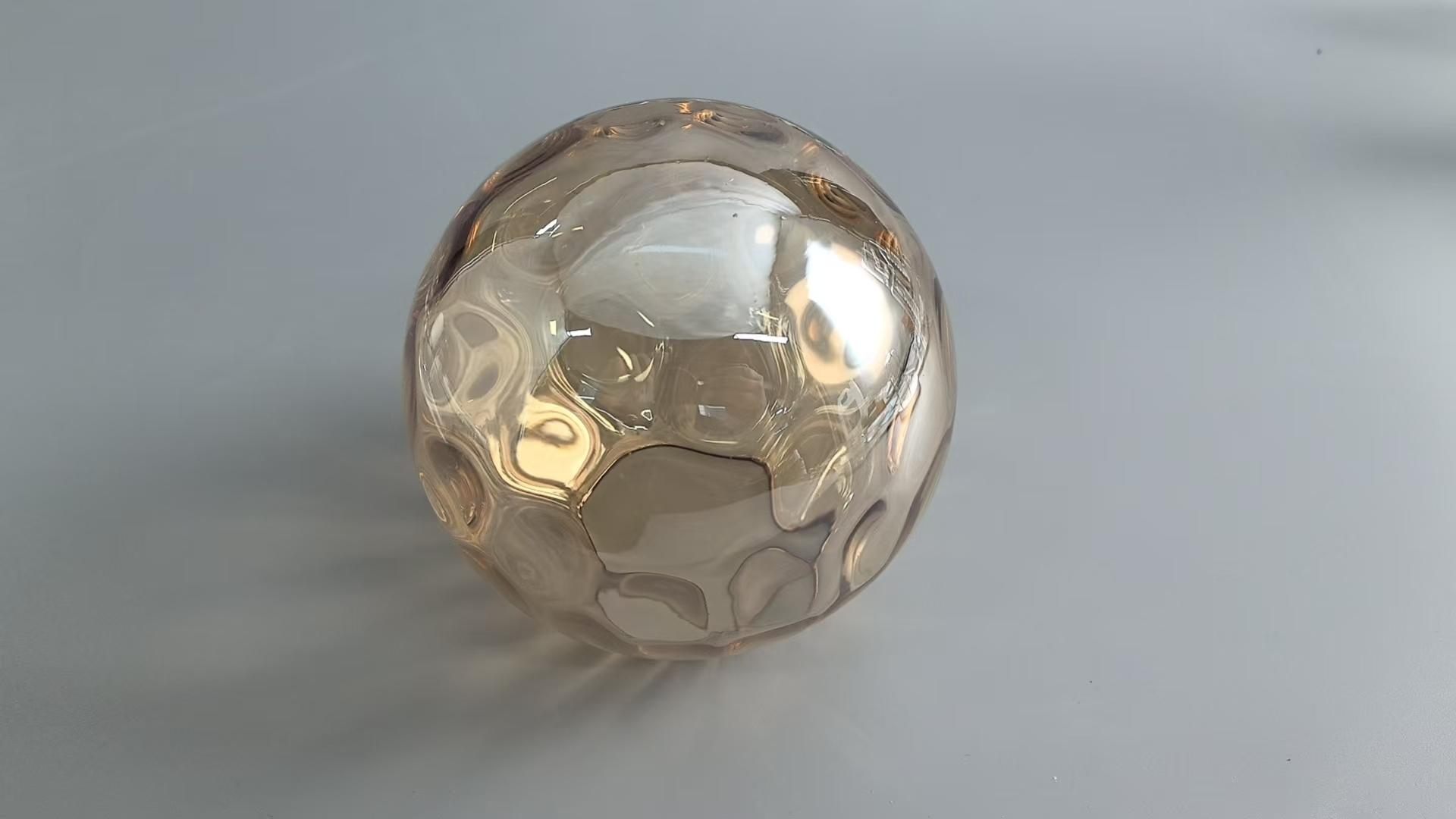
(2) Sassanian glass The characteristic of Sassanian glass is that it uses continuous circles to decorate vessels with simple shapes, similar to the linked bead pattern of the time, as shown in the figure. The circular ring pattern of Sassanian glass can be carved into a negative pattern in the model and blown. However, many are prepared by grinding and engraving. First, it is engraved with a grinding wheel and then polished. The concave spherical surface or protruding concave beads are ground on the glass vessel, which acts as a concave lens. Through the concave spherical surface of the front wall of the ship, several small spherical decorations on the back wall can be seen, making full use of the effects of glass on light refraction, reflection, scattering, transmission, and focusing, achieving a colorful and unpredictable effect.