

Glass nesting, a specialized decorative technique, enhances glass products through layered coloration. By embedding or overlaying colored glass within transparent substrates, artisans achieve striking visual depth and chromatic complexity. This article details four principal methods—inner sleeve, outer sleeve, glass powder, and rod techniques—each offering distinct aesthetic and functional advantages for industrial and artistic applications.
(1) Inner Sleeve Method
This technique embeds colored glass inside a transparent outer layer, eliminating post-molding engraving. Process steps:Dip a blowpipe into colored glass, forming a small bubble.Coat the bubble with transparent glass.Blow the composite into the final shape. Result: Products exhibit vibrant internal hues beneath a crystal-clear exterior.
Glass Powder Method 1
(2) Outer Sleeve Method
Colored glass is applied externally, requiring grinding/engraving to reveal layered effects. Two sub-techniques exist:
① Skin-Wrapping Method
Create a trumpet-shaped “skin” from colored glass.
Adhere it to a transparent glass bubble.
Reheat, roll, and blow into molds.
Advantage: Suitable for large engraved blanks.
② Skin-Blowing Method
Blow colored glass into a bowl-shaped skin using semi-elliptical molds.
Insert a transparent bubble into the skin, ensuring adhesion without air pockets.
Reheat and mold.
Advantage: Efficient for small products; enables multi-layering (e.g., transparent → opal → color → transparent).
Note: Skipping skin-forming risks uneven color distribution, especially in large/deep products. Finished items display rich 3D effects post-carving.
Glass Powder Method 2
(3) Glass Powder Method
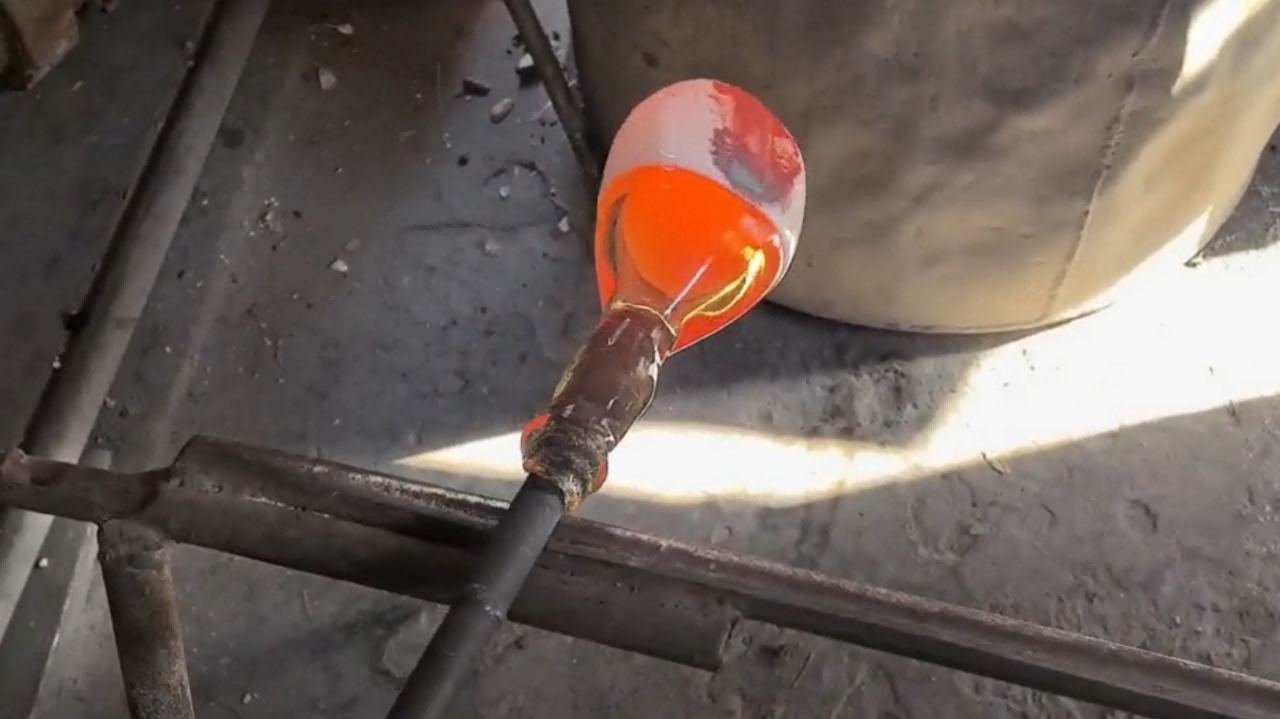
Crushed pigment glass (powder/granules) is sprinkled onto glass bubbles:
Melt adhered powder via reheating.
Encase with transparent glass.
Blow into shape (vases/artware).
Effects:
Transparent powder: Granular texture (viewed closely).
Opalescent powder: Creates light-permeable voids resembling porcelain.
Metal-oxide powders: Reduce to metallic finishes when reacting with mold carbon (Fig. 4-19).
Particle Sizing:
Fine powder: 200-mesh sieve.
Granules: 5–10-mesh (Fig. 4-20) or 30–80-mesh sieves (Fig. 4-21).
Critical Considerations:
Thermal Compatibility: Mismatched expansion coefficients cause micro-cracks → safety risks.
Powder Application: Use pre-cooled spoons (not blowpipes) to avoid oxide inclusions.
Contamination Control:
Employ magnets to remove iron debris.
Maintain strict hygiene during processing.
Storage: Keep powders dry.

Glass Powder Method 3
(4) Rod Method
Ideal for multi-color art glass with low-volume needs:Pre-draw colored glass into rods (Fig. 4-22); anneal/store.Soften rods in kilns; attach to transparent glass.Blow combined materials. Limitation: Unsuitable for large items (color inconsistency); best for small artware. Advantage: Eliminates separate color-material melting; compatible with clear-glass pool furnaces.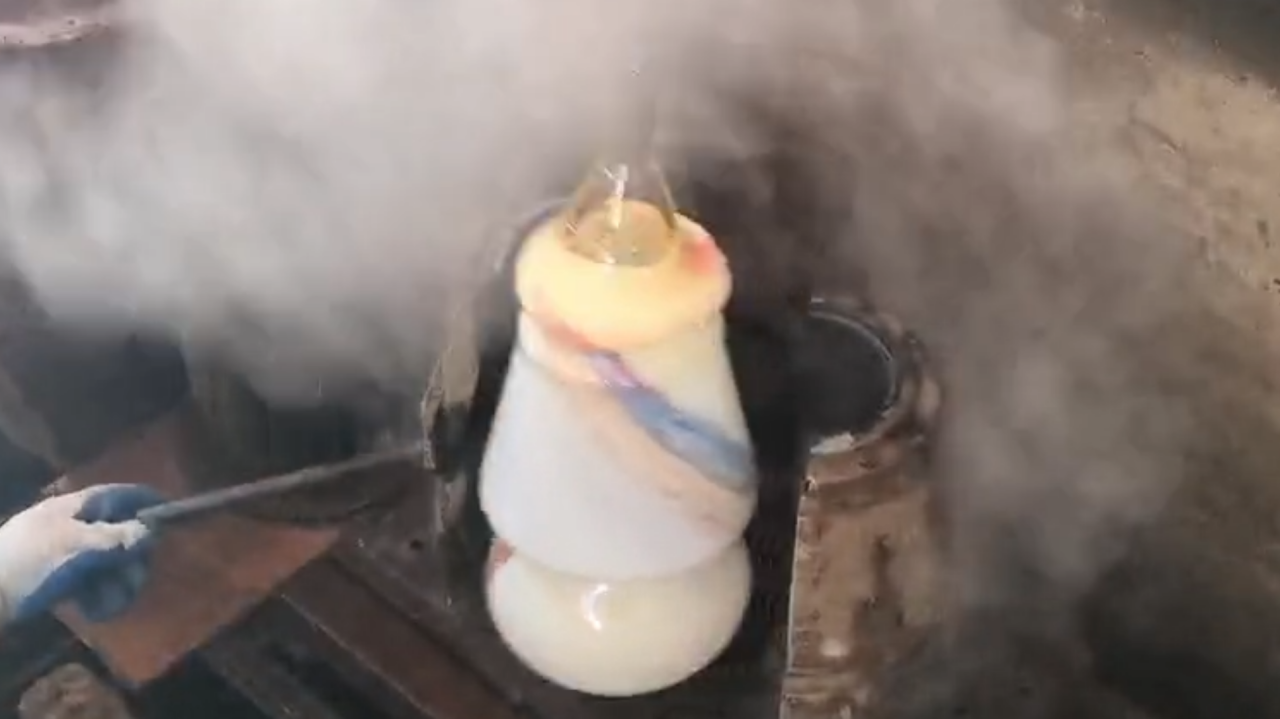
Glass Powder Method 4


